What Is Annealed Wire? Uses, Applications and Sizes
7 September 20263 min read
Annealed wire is a low-carbon steel wire softened by high-temperature heat treatment, making it flexible and easy to bend. A comprehensive guide to what annealed wire does, its sizes, applications, types and pricing factors.
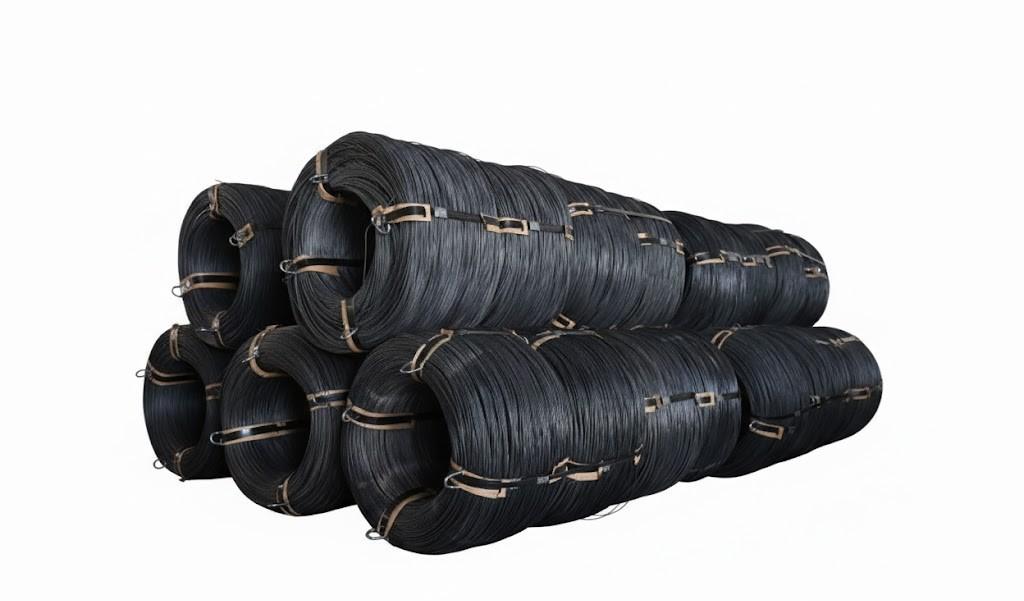
Annealed wire is a low-carbon steel wire made flexible and easy to bend by high-temperature heat treatment (annealing). The annealing process relieves the wire's internal stresses, increases its ductility and reduces its hardness, so it bends easily by hand and does not snap when twisted. It is most commonly used for tying reinforcement bars in construction, baling in agriculture, and general tying work.
Annealed wire is also known as annealed tie wire, tie wire or construction wire.
How is annealed wire produced?
- Raw material: Low-carbon steel wire rod (usually SAE 1006-1008) is fed into the drawing line.
- Cold drawing: The wire is drawn through calibrated dies at room temperature; it hardens at this stage.
- Annealing: The drawn wire is annealed at roughly 600-900 °C in a controlled-atmosphere furnace, which relieves internal stresses and softens it.
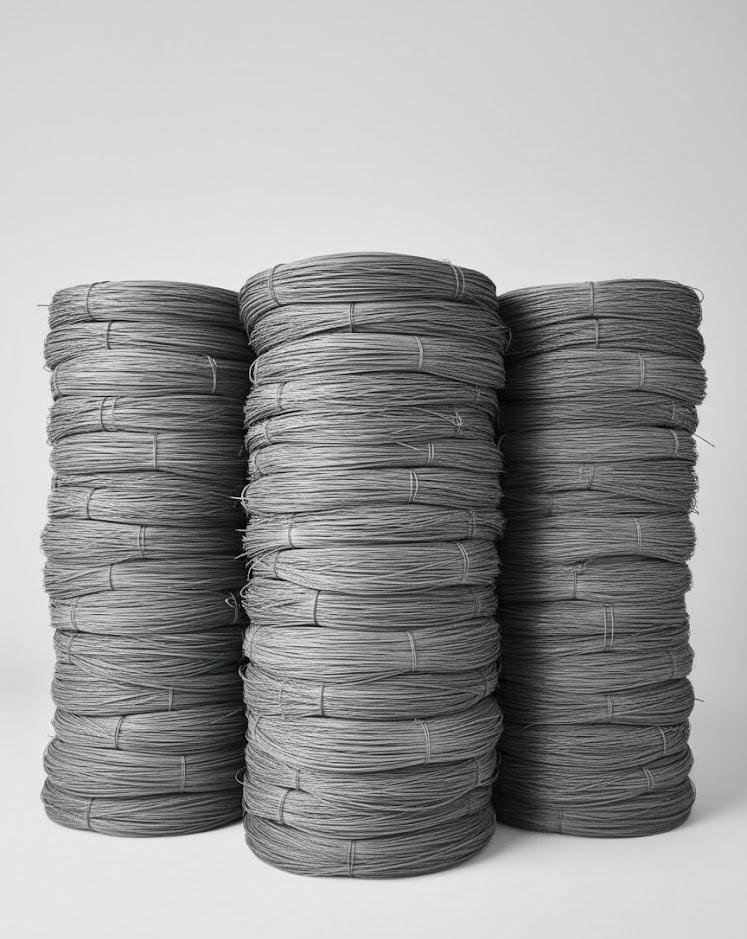
- Cooling and packaging: The wire is packaged as a coil, roll, spool or mastercoil.
What does annealed wire do?
The main function of annealed wire is tying. Its main uses are rebar tying in construction, baling in agriculture, fence and mesh fixing, and packaging and tensioning work.
What sizes does annealed wire come in?
Annealed wire is generally available between 0.50 mm and 6.00 mm. The most common in construction is 1.00-3.00 mm, and 1.50 mm for standard rebar tying.
| Diameter (mm) | Use |
|---|---|
| 0.50 - 1.00 | Fine tying, light work, mesh tying |
| 1.00 - 2.00 | Rebar tying (most common: 1.50 mm) |
| 1.80 - 4.00 | Baling wire |
| 2.00 - 6.00 | Reinforcement wire, steel mesh, heavy applications |
Technical properties
| Property | Value |
|---|---|
| Raw material grade | SAE 1006 - 1008 (low carbon) |
| Tensile strength | 300 - 450 MPa |
| Diameter range | 1.00 - 6.00 mm (AFA Çelik production) |
| Diameter tolerance | -0.05 / +0.05 mm |
Types of annealed wire
- Rebar tie wire: Thin (1-2 mm), for tying reinforcement bars
- Reinforcement wire: Thick (2-6 mm), for steel mesh and concrete
- Baling wire: Oiled and ordered-wound, for agricultural baling
Frequently asked questions
What does annealed wire do?
It is used for tying: rebar tying, baling, fence and mesh fixing, packaging and tensioning.
What sizes does annealed wire come in?
Generally 0.50-6.00 mm; most commonly 1.00-3.00 mm in construction and 1.50 mm for rebar tying.
Is annealed wire the same as tie wire?
Yes. Tie wire is the name for annealed wire in construction. Annealed wire is also produced as baling and reinforcement wire.
Why is annealed wire soft?
Annealing relieves the internal stresses from cold drawing and softens the wire, which is needed for tying by hand.
Does annealed wire rust?
Yes. It is not galvanised and rusts in damp conditions. Store it dry, covered and off the ground.
AFA Çelik annealed wire production
AFA Çelik produces annealed wire at its facility in Adana, Türkiye, in SAE 1006-1008, 1.00-6.00 mm, 300-450 MPa, to a -0.05 / +0.05 mm tolerance. Request a quote or contact us.