Why Does Annealed Wire Tangle During Coil Payoff?
1 November 20267 min read
Investigate annealed wire tangles by recording the coil, carrier, exit path and operating stage. Use a practical checklist before changing the package or setup.
Annealed wire may tangle during coil payoff when released loops catch one another, the package does not match the payoff arrangement, or the outgoing wire encounters an obstruction. First record whether the disturbance starts on the coil, around the carrier or beyond the first guide. “The wire tangles” does not distinguish a winding issue from a feed-system problem.
Payoff means releasing wire from its package and presenting it to the next process. This guide helps organize observations and purchasing information. It does not prescribe a universal brake, tension, speed or guide adjustment.
Why distinguish a coil, reel and carrier?
Packages described by the same everyday name may require different support arrangements. A loose coil, flanged reel and carrier-mounted package are not automatically interchangeable. FENN describes payoff options for carriers, bundles, reels and small spools separately. Source: FENN payoff systems.
Record more than package weight. Include the package form, supporting surface and identification of the intended wire end. If the payoff was selected for a different package, discuss that difference with the equipment provider; similar appearance is insufficient.
How should the starting point of a tangle be recorded?
Separate the first disturbance from the wire pile produced afterwards. A loop caught around a carrier leg is a different observation from slack accumulating beside the first guide. Photograph the overall coil, exit direction and relevant contact point.
Accent's 4-Twist service manual describes a particular case in which spirals close around the carrier. That is an example of a mechanism to investigate, not a diagnosis or adjustment for every annealed-wire package. Source: Accent 4-Twist, Eliminating Tangles.
Use factual descriptions such as “two loose loops appeared before the first guide”. This gives more investigative information than “poor winding”. Record any resulting damage separately so that its final location is not confused with the point where tangling began.
What should the observation checklist include?
The table is a suggested record template, not a diagnosis or adjustment chart. It identifies information for comparing the package and feed path. Leave unobserved conditions unknown rather than filling them with assumptions.
| Observation | Details to record | Question to confirm |
|---|---|---|
| Several loops released together | Location and coil fullness | Specified package support arrangement |
| Loop catches the carrier | Contact point and carrier identity | Package and carrier geometry match |
| Slack near the first guide | Complete path from coil to guide | Layout matches the equipment plan |
| Problem appears after restarting | Sequence and visible slack | Interaction between feeding equipment |
| Only partly consumed coils affected | Remaining height and support condition | Support suits the changing package level |
| Problem begins after package change | Old and new package descriptions | Differences in dimensions, winding or carrier |
Why consider exit direction and payoff type together?
A rotating table and an overhead system withdrawing from a stationary package are different arrangements. EJP lists rotating and overhead payoff equipment separately. This supports checking the actual system rather than copying a wire path from another machine. Source: EJP payoff systems.
Prepare a simple layout showing the package, carrier, first guide and direction of travel. Date any change in position or guide height. Mark missing dimensions instead of inserting estimated distances as if they were measurements.
The drawing documents the existing arrangement; it is not a proposal to redesign the route. Establish suitability with the package supplier and equipment provider together. Avoid assuming one withdrawal direction applies to all packages.
Can behaviour change as the coil empties?
A disturbance appearing only at a particular fill level is useful information. Wyrepak's PD-3, designed for specified carriers, includes a guiding element that moves down as the package pays off. This illustrates consideration of changing package height, not a recommendation to add that component to any coil. Source: Wyrepak PD-3.
Instead of simply writing “near the end”, record the remaining height or approximate fullness when observable. Photographs from the same viewpoint at different stages can help comparison. Do not enter moving equipment areas to obtain images.
How should stop-start disturbances be assessed?
Record startup, steady operation and restarting as separate conditions. EJP describes a dancer unit for synchronizing two driven machines. It illustrates that feed behaviour can involve more than one machine; it does not justify one universal tension or speed change.
Record the operating stage and any displayed warning code. Changing several settings together obscures which change relates to the outcome. Refer technical assessment to the equipment provider rather than experimenting with unrelated adjustments.
Qualified personnel should inspect trapped wire or perform maintenance with equipment stopped and energy sources isolated under its instructions. Do not alter guards or safety devices. Accent's service manual also places servicing within qualified work and appropriate isolation procedures.
What does a useful comparison record look like?
Hypothetical example: two coils arrive under one order. For one coil, loose loops are observed before the first guide during restart; no such observation is recorded for the other. The difference does not establish that the first coil is defective, because the comparison conditions are not yet known.
List package identity, payoff identity, fullness and operating stage side by side. Preserve differences: one coil may be new and another partly consumed, or a guide position may have changed. Do not mark unknown conditions as identical.
Finish with three entries: observation, changed conditions and unresolved question. An example is “slack before first guide; different fullness; confirmation of support at this level required”. This is an illustrative record, not an AFA customer case, measured result or confirmed failure cause.
Keep original photographs and label each with the related record number. A later discussion may need the complete setup rather than a cropped detail. Record who supplied each observation so that unanswered questions can be returned to the appropriate team.
What package information belongs on a repeat order?
Alongside diameter and total quantity, specify coil weight, inner diameter, outer diameter and height. Identify the carrier and payoff arrangement. If the intended withdrawal method is unknown, request written package information instead of adopting an assumed direction.
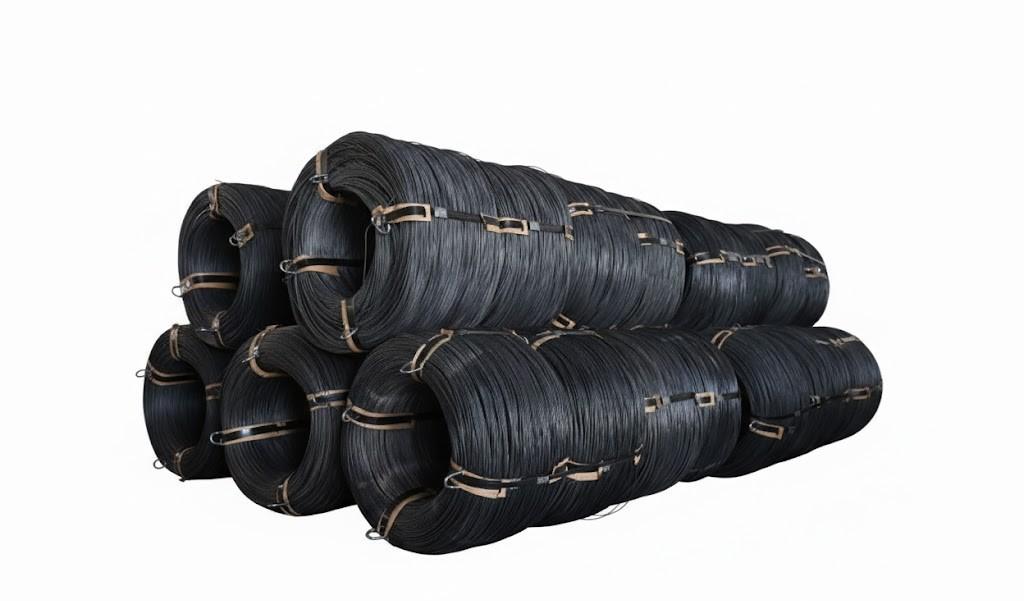
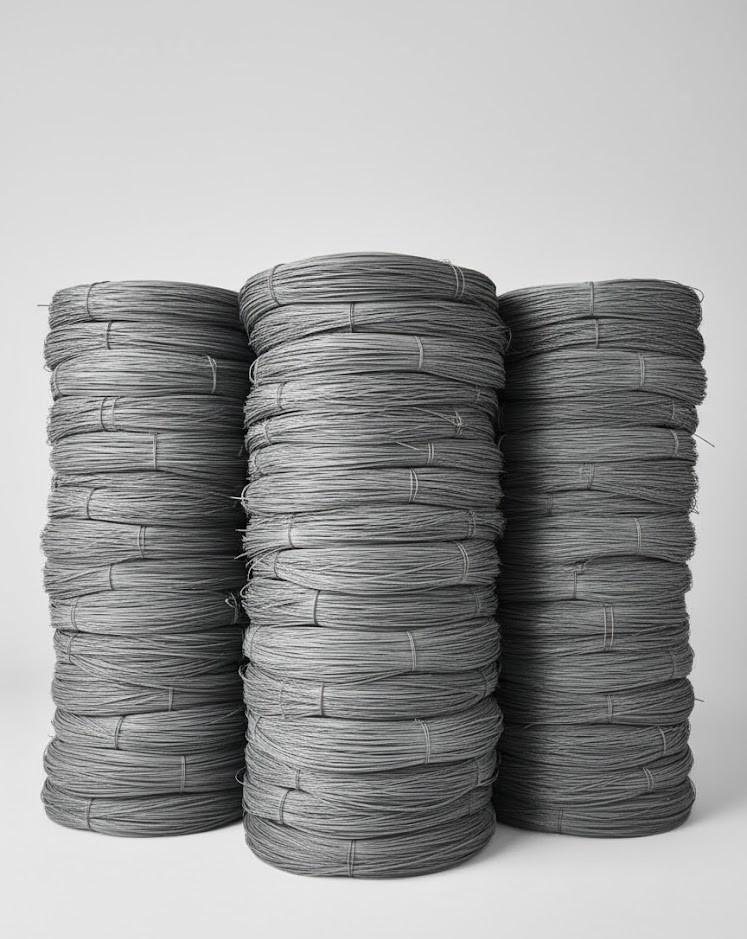
When comparing the annealed wire range with construction tie wire packaging, do not apply dimensions for one package weight to every option. Use the diameter measurement guide for dimensional checks and the storage guide for waiting stock. Add package requirements to an enquiry to AFA Çelik.
What are common questions about tangled coils?
Does tangling always mean the coil was wound incorrectly?
No; a tangled appearance alone cannot establish that conclusion. Assess the package, carrier and wire path together. Recording the starting point and conditions helps narrow the investigation.
Will choosing a heavier coil prevent tangling?
Weight alone is not a solution. Package dimensions and the payoff's accepted arrangement need consideration together. Confirm suitability before changing package weight.
Can every coil be unwound in the same direction?
Do not generalize the withdrawal direction across packages. Use package markings, supplier information and payoff instructions together. Resolve conflicting information before changing the arrangement.
Should pulling tension be increased to clear a tangle?
There is no general instruction to increase tension. Feed and control arrangements differ between systems. Adjustment decisions should follow the particular equipment's documentation and technical support.
Is a close photograph of tangled wire enough for the supplier?
A close view helps but does not show the full route. Include the package label, carrier, first guide and when the problem started. This allows package and equipment information to be considered together.