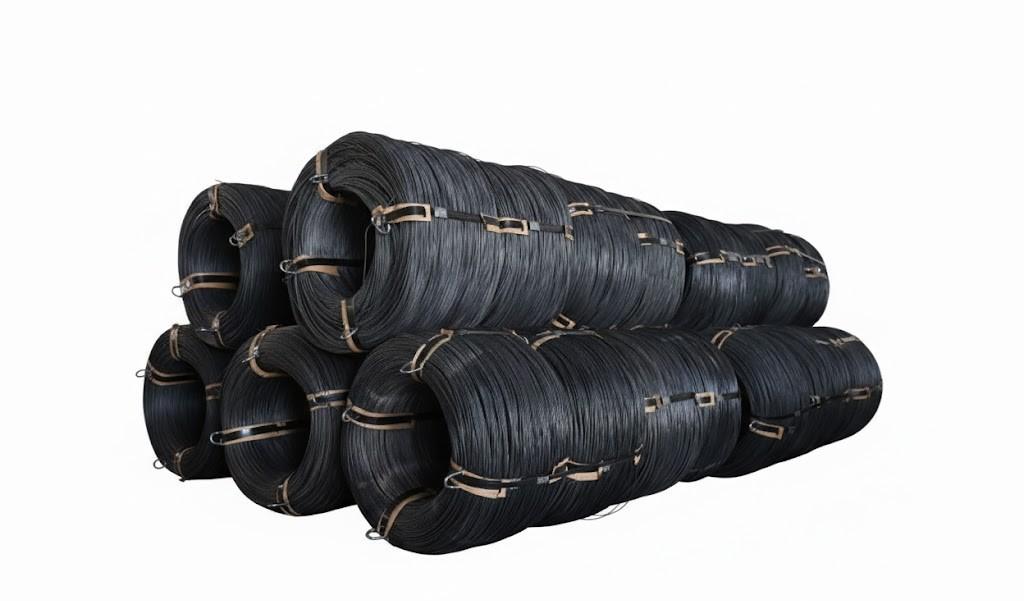
Steel Wire Coil Weight: Net, Gross and Tare Explained
5 November 20266 min read
Reconcile steel wire delivery weights using coil IDs, gross and tare records, a worked net-weight example and clearly identified packing-list quantities.
Check a steel wire coil's net weight by subtracting the tare from the gross weight for the same identified load. The coil IDs, packaging included and document quantity must refer to the same material. Comparing a pallet's gross scale reading directly with an invoice for net wire creates a misleading difference.
This guide proposes a receiving record that connects warehouse weighing with purchasing documents. Keep coil count, individual package weight and total net quantity as separate fields. It addresses delivery reconciliation, rather than estimating wire length or selecting export packaging.
What do net, gross and tare weight mean?
Gross is the complete load being weighed; tare is the carrier or packaging deducted; net is the quantity remaining. OIML R 76-1, T.5.2 distinguishes gross, net and tare indications. A display showing kilograms does not, by itself, identify which value you are reading.
Define the deduction boundary: does it include a pallet, empty spool, wrap, cardboard or securing ties? Even a steel securing band may be packaging rather than purchased wire, depending on the agreed product description. Do not deduct the same item once individually and again within a combined packaging allowance.
AFA's published rebar tie wire packaging information gives a 5–35 kg weight range. That range does not establish that every delivered package has the same weight. Identify the selected nominal package size and whether the label states a net quantity, gross quantity or target quantity.
What should you record before weighing the coils?
Start with the purchase order, product, wire diameter, batch and coil or pallet identifier. Count packages and retain readable label photographs. Showing the identified package and its wrapping together helps explain the measurement later. Give an unidentified package a temporary receiving reference without presenting it as a manufacturer's batch number.
Record the date, operator, scale identifier, unit, gross indication, tare source and calculated net separately. Check whether the instrument's operating range and display interval suit the quantity under review. A platform capable of carrying the shipment is not automatically suitable for measuring a much smaller piece of packaging.
The METTLER TOLEDO IND449 manual describes waiting for a stable indication and managing tare separately. Follow your instrument's own zero and tare instructions. The entire load must rest on the weighing surface without another support carrying part of it. Check the current tare setting before treating a zero display as a fresh starting point.
Should tare be measured or entered as a preset value?
Measured tare and preset tare have different origins. One comes from weighing the relevant empty carrier and packaging; the other uses an already known or agreed value. For preset tare, record the package type, the value's source and why it applies to this delivery. Do not assume that every pallet weighs the same.
Plan packaging removal within the site's handling arrangements. Do not cut the ties keeping a coil secure merely to obtain a tare figure. Match removed items to their original package record. If some packaging cannot be measured, label the resulting allowance accurately instead of calling it a complete measured tare. Record wet, missing or replaced packaging.
How does a worked net-weight calculation look?
This example is entirely hypothetical: it is not an AFA delivery, a scale certificate or an acceptance tolerance. Suppose a packing list assigns 250.00 kg of total net wire to ten coils on one pallet. The following assumed measurements belong to that same load. Decimal places illustrate arithmetic, not a claim about instrument accuracy.
| Record | Weight | Purpose |
|---|---|---|
| Documented total net wire | 250.00 kg | Comparison quantity |
| Packed load, gross | 262.40 kg | Starting total |
| Relevant empty pallet | 10.80 kg | Tare component |
| Removed wrapping and ties | 1.60 kg | Additional tare component |
| Combined tare | 12.40 kg | 10.80 + 1.60 |
| Calculated net wire | 250.00 kg | 262.40 − 12.40 |
Subtracting only the pallet would produce 251.60 kg, leaving packaging inside the apparent wire quantity. Conversely, agreement with the total does not prove that each coil individually contains 25.00 kg. If acceptance depends on individual package weights, use the agreed package records or inspection plan; a pallet total does not answer that question.
What if the invoice and scale ticket disagree?
First confirm the same shipment and material group. A partial delivery, a mixed pallet or a duplicated ticket can change a document total. Put kilograms and tonnes on a common unit basis. When an invoice gives only a total, obtain the packing list to identify the coils behind that number.
Next reconcile the measurement boundary. If one record covers wire alone and another includes a pallet, establish the tare before comparing results. Packaging replaced between dispatch and receipt may invalidate the earlier tare assumption. Preserve original electronic or printed records alongside spreadsheet calculations so every figure remains traceable to its source.
NIST explains that separately rounded gross, net and tare indications need not always form an exact arithmetic sum. Do not edit original ticket values to hide a display difference. Understand the weighing method and rounding behaviour before classifying a discrepancy as either a confirmed shortage or automatically acceptable variation.
If the difference remains unexplained, arrange a controlled repeat weighing of the same identified load. Retain both results instead of choosing whichever resembles the expected quantity. Agree the repeat method, instrument and reviewer. This guide supplies no universal kilogram or percentage acceptance threshold for wire deliveries.
Are calibration and verification the same thing?
No. Sartorius distinguishes calibration, which establishes the relationship between indication and reference mass, from adjustment, which changes instrument behaviour. Legal metrological verification is also distinct from calibration. Check document scope and instrument identity; this article does not prescribe a country's mandatory inspection interval.
What are the common questions about coil weight?
Does a NET display prove the correct wire quantity?
It can indicate that tare has been applied, but it does not prove the correct packaging was deducted. Check the tare value and the package it represents. A setting retained from a previous load can affect the next record.
Can pallet weight be divided between its coils?
That is an allocation calculation, not an individual coil measurement. Label it accordingly and do not present allocated values as separately weighed package results.
Can a nominal label replace a weighing record?
A nominal figure can describe the ordering target. Establish whether the document records a measured quantity or a nominal package description, then compare like with like.
Does checking one coil confirm the whole shipment?
One measurement directly describes that identified package. Decisions about the delivery require the agreed inspection scope; a single convenient result cannot establish every package's actual weight.
Can a diameter calculation resolve an unknown tare?
Theoretical wire mass does not recover missing packaging measurements. If diameter also needs investigation, use the wire diameter measurement guide and keep the two checks separate.
For an annealed wire order, specify total net demand, package weight and the receiving method. Include the tare boundary and requested packing-list information in your quotation enquiry so quantity reconciliation is defined before dispatch.