What Is Annealed Wire? Uses, Applications and Sizes
31 August 20265 min read
Annealed wire is a low-carbon steel wire softened by high-temperature heat treatment, making it flexible and easy to bend. A comprehensive guide to what annealed wire does, its sizes, applications, types and pricing factors.
Annealed wire is a low-carbon steel wire made flexible and easy to bend by high-temperature heat treatment (annealing). The annealing process relieves the wire's internal stresses, increases its ductility and reduces its hardness. As a result, the wire bends easily by hand and does not snap when twisted. It is most commonly used for tying reinforcement bars in construction, baling in agriculture, and general tying work.
Annealed wire is also known in the sector as annealed tie wire, tie wire or construction wire. In this guide we explain in detail what annealed wire is, what it does, what sizes it comes in, and where it is used.
How is annealed wire produced?
- Raw material: Low-carbon steel wire rod (usually SAE 1006-1008 grade) is fed into the drawing line.
- Cold drawing: The wire is drawn through calibrated dies at room temperature to the required diameter. It hardens at this stage.
- Annealing: The drawn wire is annealed at roughly 600-900 °C in a controlled-atmosphere furnace. This heat treatment relieves internal stresses and softens the wire.
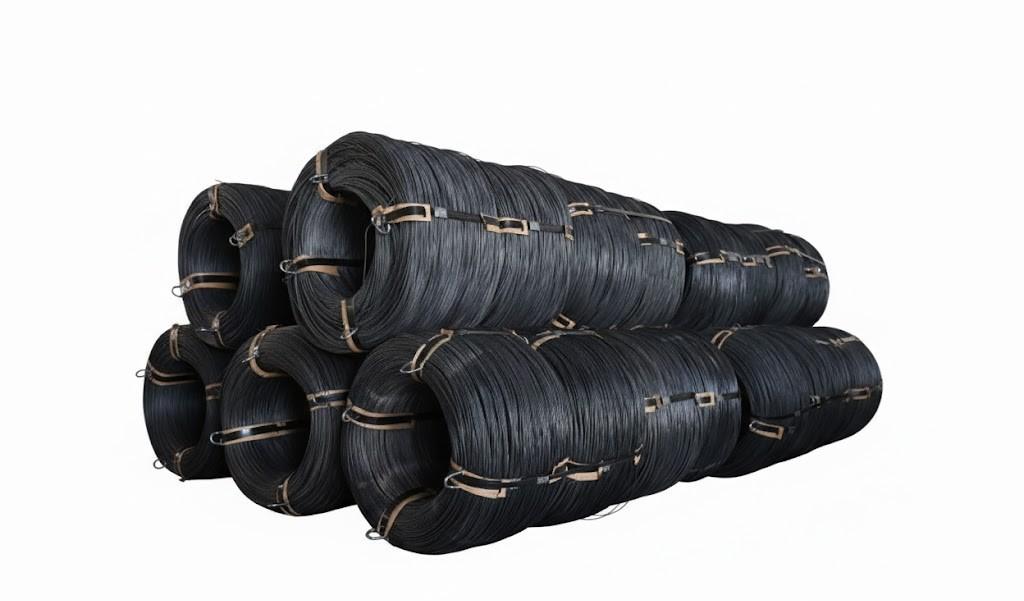
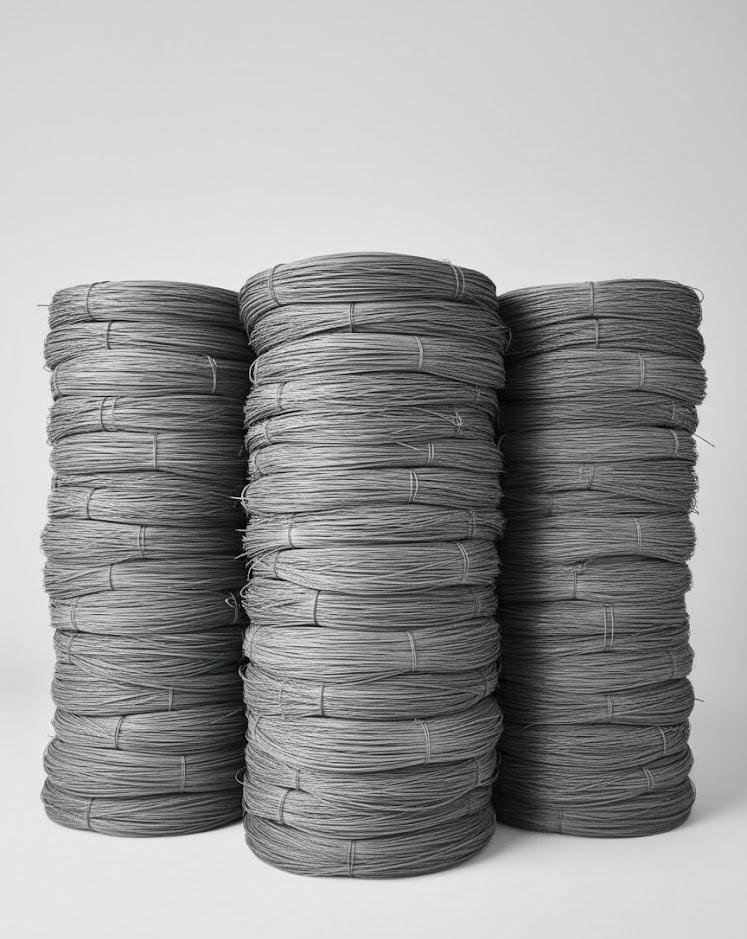
- Cooling and packaging: After controlled cooling, the wire is packaged as a coil, roll, spool or mastercoil.
Without annealing, the wire would stay hard and snap when bent by hand. We explain the difference between annealed and un-annealed (cold-drawn) wire in our annealed wire vs black wire article.
What does annealed wire do?
The main function of annealed wire is tying. Thanks to its soft, flexible structure, it binds two objects together by hand, quickly and securely. Its main uses:
- Tying reinforcement bars at intersection points in construction
- Binding straw, hay and forage bales in agriculture
- Fixing fences, cages and wire mesh
- Packaging, bundling and tensioning work
- General tying in the home and workshop
Where is annealed wire used?
Construction
The most common application. Annealed tie wire is used to tie column, beam and slab bars in reinforced concrete. Thicker reinforcement wire is used for steel mesh production and concrete reinforcement.
Agriculture
Oiled baling wire is used to bind straw and hay bales in balers. Annealed wire is also used in greenhouse, vineyard and fence-fixing work.
Industry and general use
It is used as a general-purpose tie wire in packaging, bundling, tensioning, home and workshop applications.
What sizes does annealed wire come in?
Annealed wire is generally available in various diameters between 0.50 mm and 6.00 mm. The most common diameters in construction are between 1.00 mm and 3.00 mm; 1.50 mm is the most preferred for standard rebar tying.
| Diameter (mm) | Use |
|---|---|
| 0.50 - 1.00 | Fine tying, light work, mesh tying |
| 1.00 - 2.00 | Rebar tying (most common: 1.50 mm) |
| 1.80 - 4.00 | Baling wire |
| 2.00 - 6.00 | Reinforcement wire, steel mesh, heavy applications |
For details on diameter selection, see our how to choose tie wire diameter article.
Technical properties of annealed wire
| Property | Value |
|---|---|
| Raw material grade | SAE 1006 - 1008 (low carbon) |
| Tensile strength | 300 - 450 MPa |
| Diameter range | 1.00 - 6.00 mm (AFA Çelik production) |
| Diameter tolerance | -0.05 / +0.05 mm |
| Structure | Annealed (soft, flexible) |
| Surface | Black (oxide) or bright |
| Packaging | Coil, roll, spool, mastercoil, pallet, big bag |
Types of annealed wire
Annealed wire is produced under different names according to its use:
- Rebar tie wire: Thin (1-2 mm), for tying reinforcement bars
- Reinforcement wire: Thick (2-6 mm), for steel mesh and concrete reinforcement
- Baling wire: Oiled and ordered-wound, for agricultural baling
All belong to the same annealed wire family; the difference is diameter, surface treatment and purpose. To compare all types, see our steel wire types and selection guide.
What determines annealed wire prices?
Annealed wire prices are not fixed. They depend most on the current wire rod (raw material) price, then diameter, order quantity, packaging type and delivery distance. That is why you need a quote for a current, personalised price. For details on the pricing factors, see our factors that determine tie wire prices article.
Frequently asked questions
What does annealed wire do?
Thanks to its soft, flexible structure, annealed wire is used for tying. Its main applications are rebar tying in construction, baling in agriculture, fence and mesh fixing, and packaging and tensioning work.
What sizes does annealed wire come in?
It is generally available between 0.50-6.00 mm. The most common in construction is 1.00-3.00 mm, and 1.50 mm is used for standard rebar tying.
Is annealed wire the same as tie wire?
Yes. Tie wire is the name for annealed wire in the construction sector. So rebar tie wire is a type of annealed wire. Annealed wire is also produced as baling wire and reinforcement wire.
Why is annealed wire soft?
The annealing (heat treatment) applied during production relieves the internal stresses created by cold drawing and softens the wire. This softness is needed so the wire can be bent and tied by hand.
Does annealed wire rust?
Yes. Annealed wire is not galvanised and will rust in damp conditions. It should be stored in a dry, covered area, raised off the ground.
AFA Çelik annealed wire production
AFA Çelik produces annealed wire at its facility in Sarıçam, Adana, Türkiye. Made with SAE 1006-1008 grade raw material, a 1.00-6.00 mm diameter range, 300-450 MPa strength and a precise -0.05 / +0.05 mm tolerance, our wire is offered as tie wire, reinforcement wire and baling wire, with pallet, big bag and mastercoil options.
For annealed wire suited to your needs, request a quote or contact us.