Annealed Wire vs Cold-Drawn Black Wire: Key Differences
21 July 20265 min read
The main difference between annealed wire and cold-drawn black wire is the annealing process. A comparison of tensile strength, flexibility, diameter range and applications to help you choose the right wire for your job.
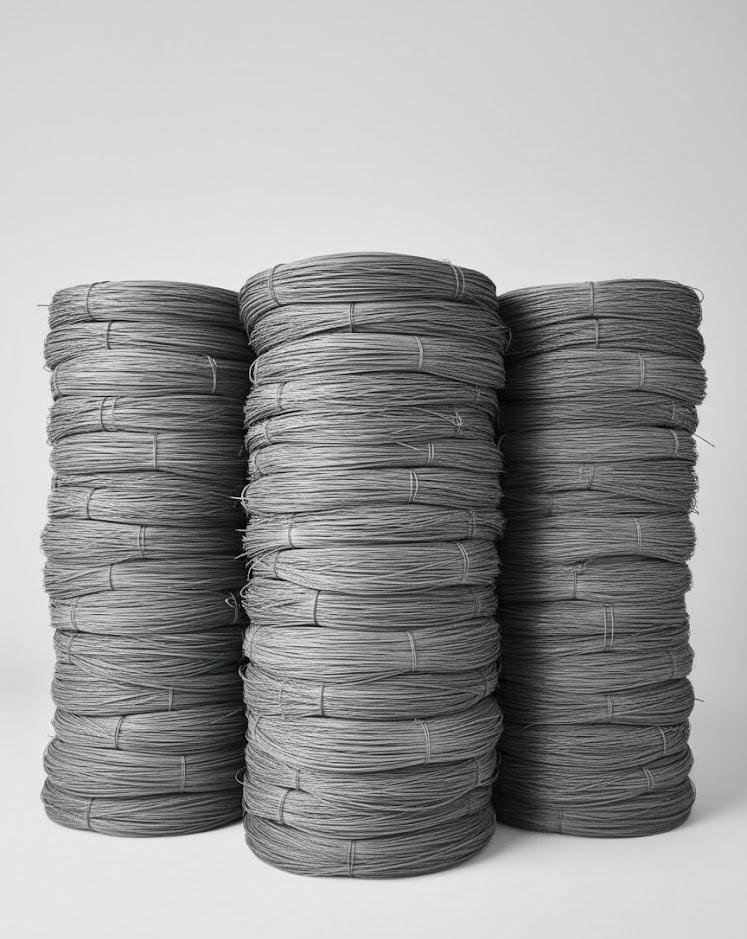
The main difference between annealed wire and cold-drawn black wire is the annealing process. Both wires are produced from the same raw material using cold drawing. Annealed wire then undergoes heat treatment in a furnace to soften it; black wire is used without annealing. As a result, annealed wire has a tensile strength of 300-450 MPa and bends easily by hand, while black wire reaches 500-1100 MPa and is hard and high-strength.
In short: use annealed wire where the wire must be bent by hand, and black wire where it must carry a load.
What is the difference between annealed and black wire?
Both products start with steel wire rod drawn through successive dies at room temperature. This compresses the internal structure and increases tensile strength, but it also makes the wire hard and brittle.
For annealed wire, annealing takes place at this stage. The wire is heated in a controlled-atmosphere furnace and cooled slowly. This relieves the internal stresses created during cold drawing; the wire softens, elongation increases and tensile strength drops.
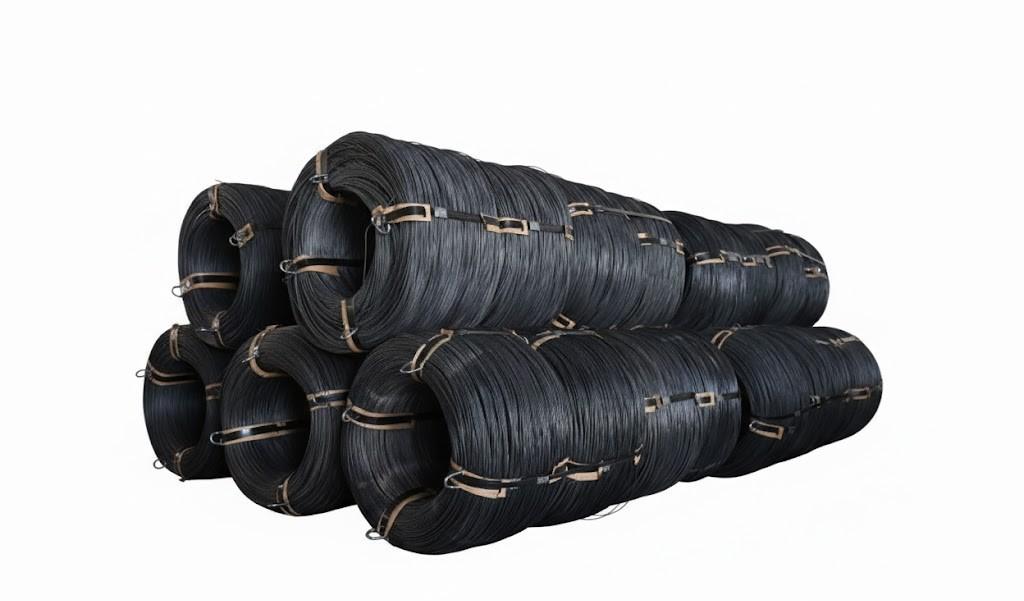
Black wire is not annealed. It retains the high strength gained from cold drawing, but is too hard to be shaped by hand.
Technical comparison
| Property | Annealed Wire | Cold-Drawn Black Wire |
|---|---|---|
| Tensile strength | 300 - 450 MPa | 500 - 1100 MPa |
| Diameter range | 1.00 - 6.00 mm | 1.80 - 6.00 mm |
| Raw material grade (SAE) | 1006 - 1008 | 1006 · 1008 · 1010 · 1012 · 1015 · 1018 |
| Diameter tolerance | -0.05 / +0.05 mm | -0.05 / +0.05 mm |
| Heat treatment | Yes (annealing) | No |
| Bends by hand | Easily | Poorly |
| Typical use | Rebar tying, baling, mesh | Nails, springs, wire mesh, fence panels |
Which wire for which application?
Applications requiring annealed wire
Rebar tying. On site, reinforcement bars are tied by hand at intersection points, quickly and repeatedly. The wire must bend easily and must not snap when twisted. AFA Çelik rebar tie wire is produced in the 1.00-2.00 mm range for this purpose.
Baling. When binding straw and hay bales, the wire is twisted and knotted inside the machine. Hard wire breaks during this operation. Oiled baling wire also runs through the machine with low friction thanks to its surface lubrication.
Mesh and reinforcement. In larger diameters, reinforcement wire is used to strengthen concrete structures against tensile stress. It is produced in the 2.00-6.00 mm range on 50-850 kg coils.
Applications requiring black wire
Nail and fastener manufacturing. A nail must not bend when driven, which requires high tensile strength. Annealed wire cannot be used here.
Spring production. A spring's return characteristic depends directly on tensile strength. Medium and high carbon cold-drawn black wire is preferred.
Wire mesh, fence panels and safety barriers. Hard wire is used because the structure must carry load and resist external forces.
What happens if you choose the wrong wire?
Two mistakes are common on site.
Using black wire for tying. The wire snaps while being bent, labour time increases and connection points become unreliable. Broken wire ends also create a safety hazard.
Using annealed wire in load-bearing applications. The wire stretches under tension and deforms permanently. Mesh sags and fencing loses its tension.
The decisive question is this: will the wire be shaped by hand during installation, or will it carry load once installed? The first case calls for annealed wire, the second for black wire.
How to choose the diameter
Once tensile strength is settled, diameter comes next. General guidance:
- 1.00 - 1.60 mm: Light rebar tying, light binding work
- 1.60 - 2.00 mm: Standard reinforced concrete tying
- 2.00 - 3.00 mm: Baling, medium load binding
- 3.00 - 6.00 mm: Mesh, reinforcement, structural applications
You can use our wire calculator to work out the quantity you need.
Frequently asked questions
Are annealed wire and tie wire the same thing?
Tie wire is the name given to annealed wire in the construction sector. So every tie wire is annealed wire, but not every annealed wire is tie wire. Annealed wire is also produced as baling wire and reinforcement wire.
Why does black wire look black?
The colour comes from the oxide layer formed on the surface during production, not from paint or coating. Because this layer is not removed, the wire appears dark. It provides no corrosion protection.
Does annealed wire rust?
Yes. Annealed wire is not galvanised and will rust in damp conditions. For applications exposed to the open air for long periods, galvanised wire should be used. Store in a dry, covered area, raised off the ground.
How many metres are there in one tonne of tie wire?
It depends on the diameter. A 1.50 mm wire gives approximately 72,000 metres per tonne, and a 2.00 mm wire approximately 40,500 metres. Use our calculator for an exact figure.
Why is annealed wire lower in tensile strength?
Annealing relieves the internal stresses created during cold drawing. This lowers tensile strength while increasing elongation. The lower strength is not a defect here — it is exactly what tying applications require.
Is there a price difference between the two?
Annealed wire costs more to produce because it passes through an additional annealing furnace. However, price varies with diameter, order quantity and current raw material prices. Request a quote for current pricing.
Wire production at AFA Çelik
AFA Çelik produces annealed wire and cold-drawn black wire at its facility in Sarıçam, Adana, Türkiye. All products are supplied to a -0.05 / +0.05 mm diameter tolerance, with pallet, big bag and mastercoil packaging options.
For guidance on selecting the right wire for your application, get in touch, or request a quote for pricing.