SAE Steel Wire Grades Explained: What Do 1006, 1008, 1010 Mean?
31 July 20264 min read
SAE grades like 1006, 1008 and 1010 indicate the carbon content and strength of steel wire. What the codes mean, how carbon content affects wire properties, and which grade to use for which application.
SAE grades such as 1006, 1008 and 1010 indicate the carbon content of the steel. The leading "10" means plain low-alloy carbon steel; the last two digits give the carbon content as a percentage, in hundredths of a percent. So SAE 1006 contains about 0.06% carbon, and SAE 1018 about 0.18%.
The rule is simple: as the number rises, carbon content, strength and hardness increase, while flexibility and bendability decrease. This is the single most important factor in choosing the right grade of wire.
How to read an SAE code
The SAE (Society of Automotive Engineers) system classifies steels with a four-digit code:
- First digit (1): Carbon steel family
- Second digit (0): Unalloyed (plain carbon steel)
- Last two digits: Nominal carbon content (in hundredths of a percent)
Example: SAE 1008 → "10" plain carbon steel, "08" means 0.08% carbon. This logic applies to the entire 10xx series.
What does carbon content do to the wire?
Carbon is the most decisive element in steel. As its ratio increases:
- Tensile strength increases
- Hardness increases
- Ductility (elongation, bendability) decreases
- Ease of welding and forming decreases
That is why a low-carbon grade is chosen for tie wire that must be bent by hand, while a higher-carbon grade is chosen for products such as springs or nails that demand high strength.
SAE 1006 - 1018 comparison table
The values below cover the grade range used in AFA Çelik production. All of these are low-carbon steels (below 0.25% carbon).
| SAE Grade | Nominal Carbon | Character | Typical Use |
|---|---|---|---|
| 1006 | ~0.06% | Softest, most ductile | Tie wire, annealed wire |
| 1008 | ~0.08% | Soft, easy to form | Tie wire, mesh, general manufacturing |
| 1010 | ~0.10% | Balanced | Nails, wire mesh, cold drawing |
| 1012 | ~0.12% | Medium-soft | Industrial fasteners, wire |
| 1015 | ~0.15% | Medium strength | Screws, bolts, mechanical parts |
| 1018 | ~0.18% | Highest strength | Springs, prestressing, high-strength manufacturing |
Which grade is used in which product?
Low carbon (1006 - 1008): flexibility comes first
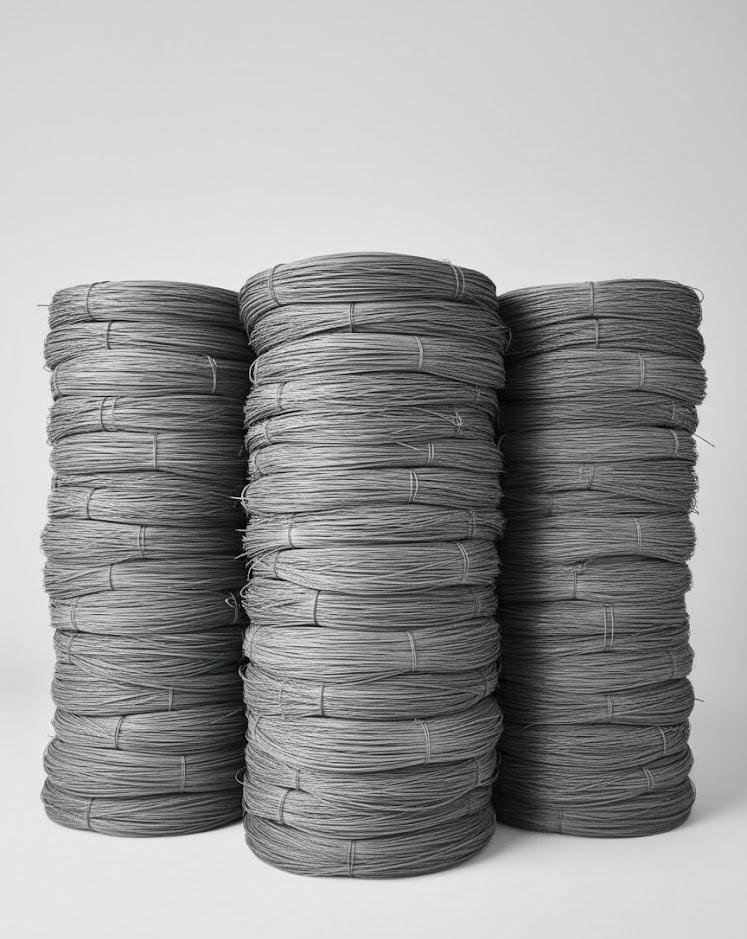
These grades are used for work that is bent, twisted and knotted by hand. AFA Çelik rebar tie wire is produced in SAE 1006; together with annealing it bends easily and does not snap when twisted. Reinforcement wire falls in the SAE 1006-1008 range.
Medium carbon (1010 - 1015): balanced applications
Used in products that require both a certain strength and workability. Nail, wire mesh, screw and bolt manufacturing draw on this range.
Higher carbon (1015 - 1018): strength comes first
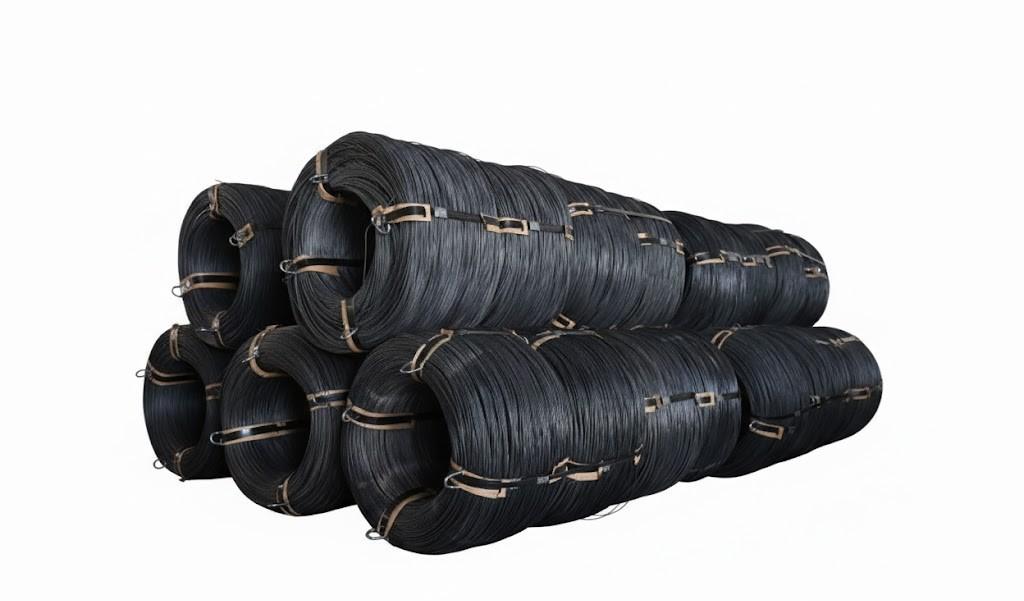
Preferred in products that carry load, spring back or face high stress. Cold-drawn black wire is produced across a wide grade range from SAE 1006 to 1018, serving both light manufacturing and high-strength applications such as springs.
Is SAE grade the same as strength?
No, and the two should not be confused. The SAE grade indicates the chemical composition of the raw material. Strength depends on both the grade and the production method.
For example, the same SAE 1008 raw material yields 300-450 MPa (soft) when annealed, but can exceed 500 MPa when cold drawn. So saying "I want high strength" is not enough; both the grade and the production method must be considered together.
Frequently asked questions
What does SAE 1008 mean?
It combines "10", meaning plain carbon steel, with "08", indicating about 0.08% carbon content. It is a low-carbon, soft, easily formed steel grade widely used in tie wire and general manufacturing.
What is the difference between SAE 1006 and 1008?
It is a difference in carbon content: 1006 contains about 0.06% and 1008 about 0.08% carbon. 1008 has slightly higher strength, while 1006 is a little softer and more ductile. Both are suitable for tie wire production.
Which SAE grade should tie wire be?
Rebar tie wire is usually produced in SAE 1006. Together with annealing, this grade provides the softness best suited to bending by hand. Higher-carbon grades remain too hard for tying.
Is a higher SAE number always better?
No. The "best" grade depends on the job. For tying, a lower number (softer) is better; for spring production, a higher number (harder) is better. Using high-carbon wire on the wrong job leads to breakage.
Are SAE and AISI the same system?
For carbon steels they are practically identical. AISI and SAE use the same four-digit codes for the 10xx series of plain carbon steels, so SAE 1008 and AISI 1008 refer to the same material.
What if I don't know which grade to choose?
Just tell us your intended application. We will recommend the appropriate SAE grade and production method based on the type of work. Contact us or request a quote.
AFA Çelik grade range
AFA Çelik produces wire across a wide grade range from SAE 1006 to 1018 at its facility in Sarıçam, Adana, Türkiye. Our annealed wire, cold-drawn black wire, reinforcement wire and oiled baling wire are supplied in the appropriate grade for the application, with a -0.05 / +0.05 mm diameter tolerance.
To get support in selecting the right grade for your project, request a quote.